


















EX Switches
EX Series switches are cloud-ready, high-performance access and distribution/core-layer devices for enterprise branch, campus, and data center networks. With the EX Series, wired access networks don’t have to be complex—you can reduce risk and cost without compromising performance, quality, or innovation. Easily onboard, configure, and manage the switches and operate campus fabrics at scale with the Juniper Mist Cloud. Combine the EX switches with Juniper’s Wi-Fi portfolio for a unified wired and wireless solution, driven by Mist AI, that delivers simple and secure connectivity at scale.
Get industry-best AI for your entire network
See how the only AI-driven network solves complexity and delights users — all while saving time and money.

Mist AI
1GbE
Access
PoE++ (802.3bt)
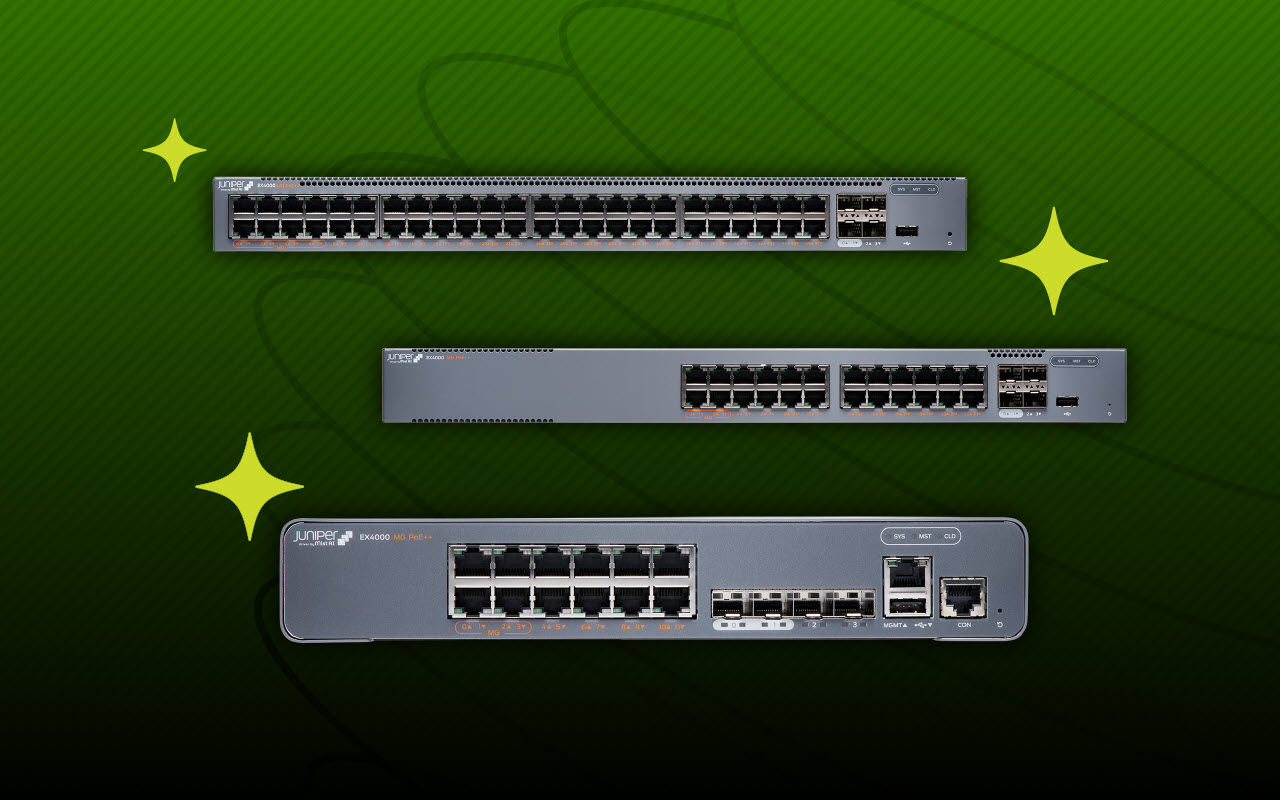
The EX4000 is a Wi-Fi 7-ready, cloud-native, and AI-Native switch series that delivers AIOps capabilities to the edge and accelerates boot up times in L2/L3 deployments. With no feature compromises, it provides a simplified, experience-first approach.
| Port density | 1GbE/2.5GbE access ports with fixed 1GbE/10GbE SFP+ uplinks on multigigabit SKUs. Dedicated 10G ports for Virtual Chassis (up to six switches). |
| Form factor | Fixed fan and PSUs. Compact fanless design for 8P and 12T/P/MP. |
| Power | PoE++ up to 60W per port on all access ports of 12, 24, 48 multigigabit SKUs. |
| Switching capacity | Up to 200Gbps (bi-directional) |
| Fabric | Virtual Chassis |

Mist AI
1GbE
Access
PoE (802.3af)
PoE+ (802.3at)
PoE++ (802.3bt)
The EX4400-48MXP is a Wi-Fi 7-ready, high-power, cloud-native, and AI-Native switch that delivers up to 3600W of PoE, designed to support high-density Wi-Fi deployments, including smart buildings and enterprise networks.
| Port density | 1/10GbE access ports, 100GbE uplink/stacking, optional 10/25/40/100GbE uplink |
| Form factor | 1 RU |
| Power | PoE++ up to 90W per port; 3600W total |
| Switching capacity | 1020 Gbps |
| Fabric | EVPN-VXLAN, Virtual Chassis |

Mist AI
Access
1GbE
PoE (802.3af)
PoE+ (802.3at)
PoE++ (802.3bt)
The EX4400-48XP is a Wi-Fi 7-ready, high-power, cloud-native, and AI-Native switch that delivers up to 3600W of PoE, designed to support high-density Wi-Fi deployments, including smart buildings and enterprise networks.
| Port density | 1 GbE access ports, 100GbE uplink/stacking, Optional 10/25/40/100GbE uplink |
| Form factor | 1 RU |
| Power | PoE++ up to 90W per port; 3600W total. |
| Switching capacity | 696 Gbps |
| Fabric | EVPN-VXLAN, Virtual Chassis |

Mist AI
1GbE
Access
PoE (802.3af)
PoE+ (802.3at)
PoE++ (802.3bt)
The EX4100-H is a secure, scalable switch designed for outdoor and extreme conditions. It is a cloud native, AI-Native switch that incorporates leading-edge technologies, including EVPN/VXLAN for building advanced campus fabrics and streaming telemetry for enhanced monitoring.
| Port density | EX4100-H-12MP: 4 x 100MB/1GbE/2.5GbE, 8 x 10MB/100MB/1GbE, 2 x 1/10GbE SFP+ uplinks, and 2 x 1/10GbE SFP+ for Virtual Chassis/uplinks. MACSec AES256 Support: 2x10G SFP+ uplinks, and 4x1G/2.5G. |
| Power | PoE++ up to 90W per port, with an overall total of 360W using two power supplies |
| Form factor | Fixed 3U (cube shape) access |
| Switching capacity | 80 Gbps |
| Fabric | EVPN/VXLAN, Virtual Chassis |

Distribution-Core
1GbE
10GbE
25GbE
40GbE
100GbE
Mist AI
The EX4400-24X is a compact, scalable, 10GbE Ethernet switch ideal for enterprise campus deployments. It is an AI-driven, cloud-native switch with EVPN-VXLAN for building advanced campus fabrics, streaming telemetry, and other leading-edge technologies.
| Port density | 24 x 1/10GbaseX, 2 x 100GbE/40GbE uplinks. Common EX4400 uplink modules including 4 x 25GbE MACsec AES256, 4 x 10GbE non-MACsec, and 1 x 100GbE MACsec AES256. |
| Form factor | 1 RU |
| Switching capacity | 1080 Gbps |
| Fabric | EVPN-VXLAN, Virtual Chassis |

Access
PoE (802.3af)
PoE+ (802.3at)
PoE++ (802.3bt)
Fast PoE
Multigigabit
1GbE
Mist AI
The EX4100 Multigigabit Ethernet Switch is an AI-driven, cloud-ready access switching platform with flow-based telemetry and advanced security built in, crafted for high-performance deployments in modern campus environments.
| Port density | 100M/1/2.5/5/10GbE access ports, 10/25 GbE uplink/stacking, 1/10GbE uplink |
| Form factor | 1 RU |
| Power | PoE++ up to 90W per port, 1620W PoE for EX4100-48MP, and EX4100-24MP |
| Switching capacity | 472 Gbps |
| Fabric | EVPN-VXLAN, Virtual Chassis |
PoE (802.3af)
PoE+ (802.3at)
1GbE
Multigigabit
Access
Mist AI
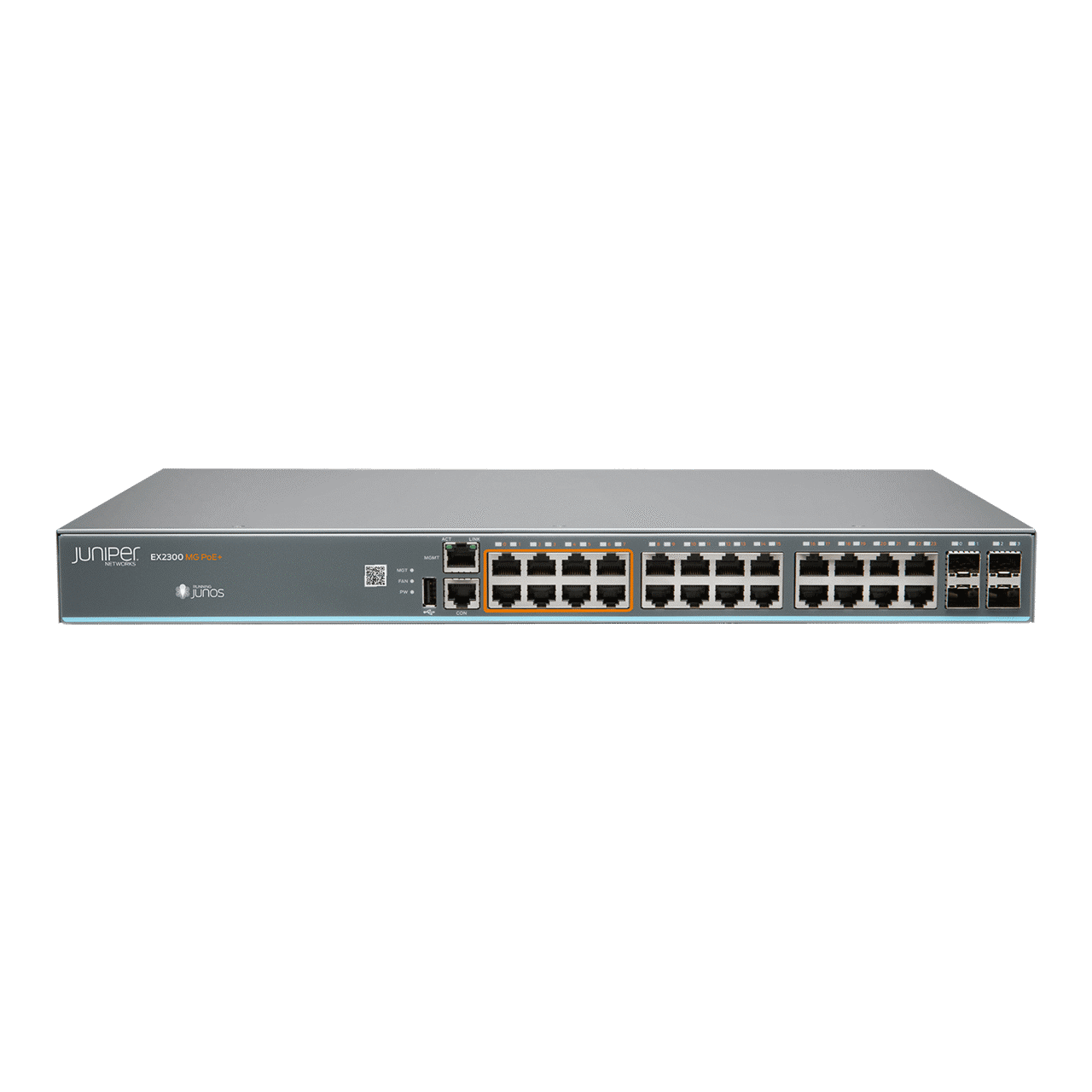
The EX2300 Multigigabit Ethernet Switch delivers a compact 1 RU high-density solution for small network environments with space, power, and budget constraints.
| Port density | 100M/1/2.5GbE and SFP+ uplink port options |
| Form factor | 1 RU |
| Power | PoE/PoE+ up to 30W per port |
| Switching capacity | 264 Gbps |
| Fabric | Virtual Chassis |
PoE (802.3af)
PoE+ (802.3at)
1GbE
Access
Mist AI
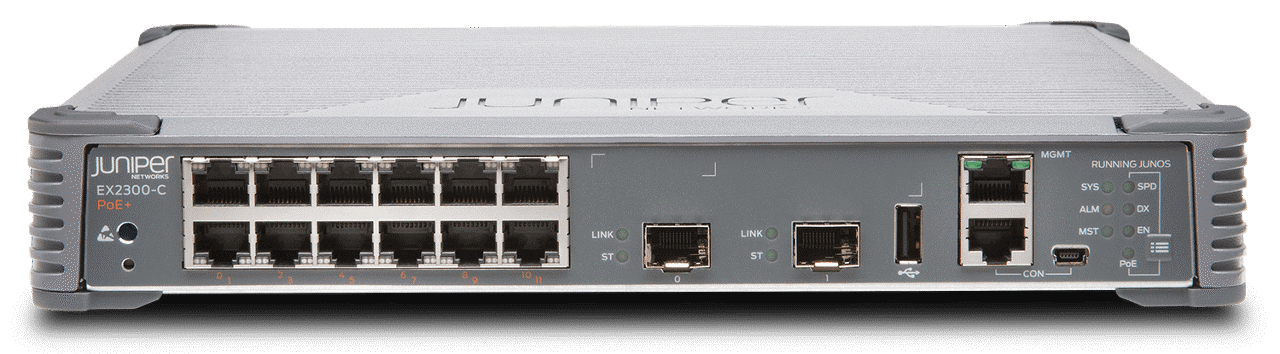
The EX2300-C Ethernet Switch offers a compact, power-efficient, cost-effective solution for low-density branch offices and enterprise workgroups.
| Port density | 12 x 1GbE and 2 SFP+ 10GbE uplinks |
| Form factor | 1 RU, fanless |
| Power | PoE/PoE+ up to 30W per port |
| Switching capacity | 64 Gbps |
| Fabric | Virtual Chassis |

Distribution-Core
10GbE
40GbE
100GbE
PoE
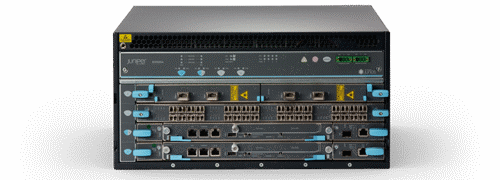
The EX9250 line of Ethernet switches provides compact, programmable, and scalable core and aggregation devices for enterprise environments, reducing cost and complexity while offering carrier-class reliability.
| Port density | 24 x 100GbE, 36 x 40GbE, 144 x 10GbE |
| Form factor | 1 or 3 RU |
| Switching capacity | 2 Tbps |
| Latency | 4.8 Tbps, 2.4 Tbps per slot |
| MAC addresses | 1 million |
| Fabric | EVPN-VXLAN, MC-LAG, ESI-LAG |
Distribution-Core
1GbE
10GbE
25GbE
40GbE
100GbE
PoE
The EX9200 line of Ethernet switches provides a programmable, flexible, and scalable foundation for delivering mission-critical applications.
| Port density | 40 x 100GbE, 480 x 10GbE, 440 x 1GbE |
| Form factor | 5, 8, or 16 RU |
| Switching capacity | 13.2 Tbps |
| MAC addresses | 1 million |
| Fabric | EVPN-VXLAN, MC-LAG, ESI-LAG |
Distribution-Core
1GbE
10GbE
25GbE
PoE
Mist AI
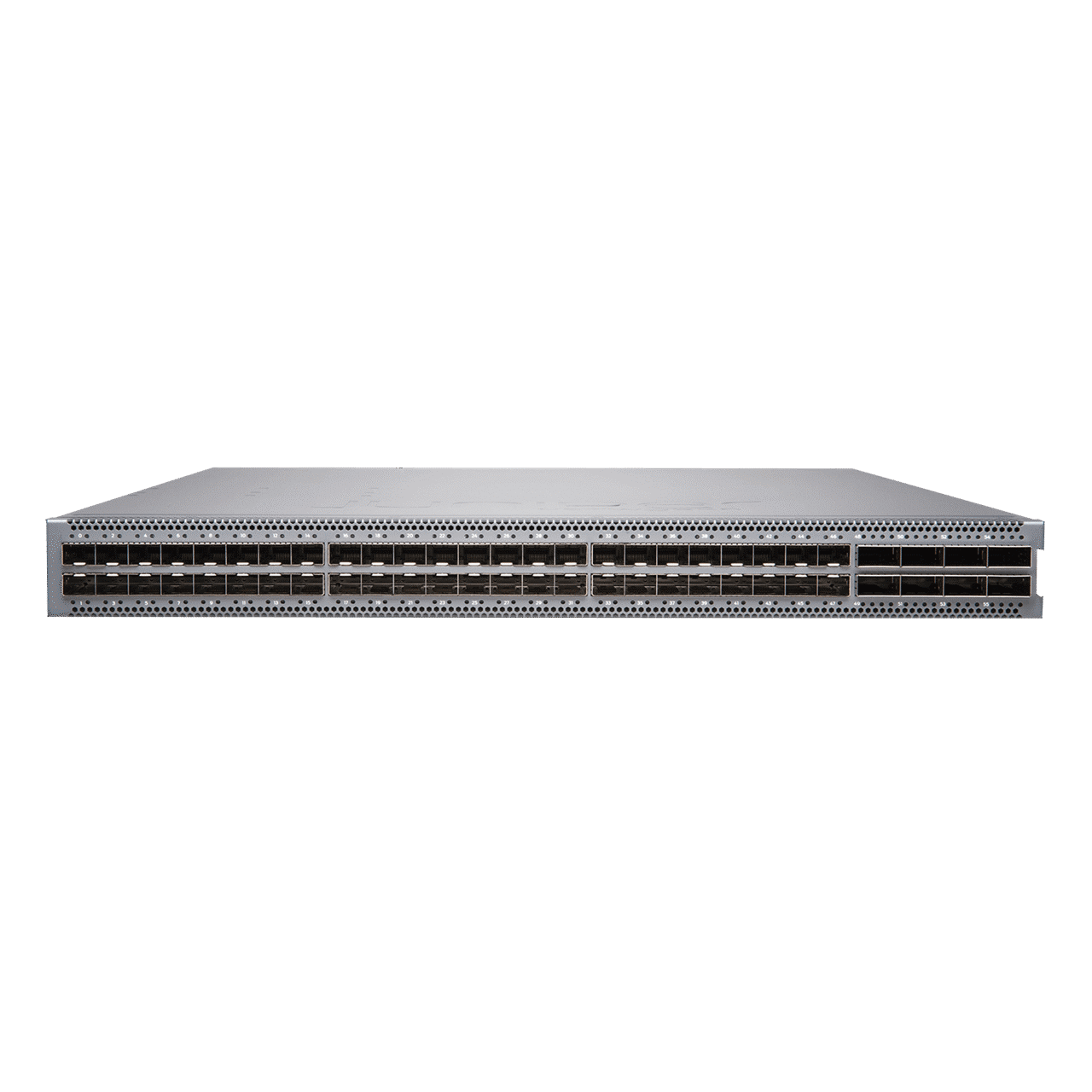
The EX4650 Ethernet Switch offers a compact, highly scalable, high-performance 10/25/100GbE solution for midsized to large enterprise campus distribution deployments.
| Port density | 48 x 10/25GbE and 8 x 40/100GbE |
| Form factor | 1 RU |
| Switching capacity | 2 Tbps |
| Latency | As low as 550ns |
| Fabric | Virtual Chassis, MC-LAG, ESI-LAG, EVPN-VXLAN |
Distribution-Core
1GbE
10GbE
PoE
Mist AI
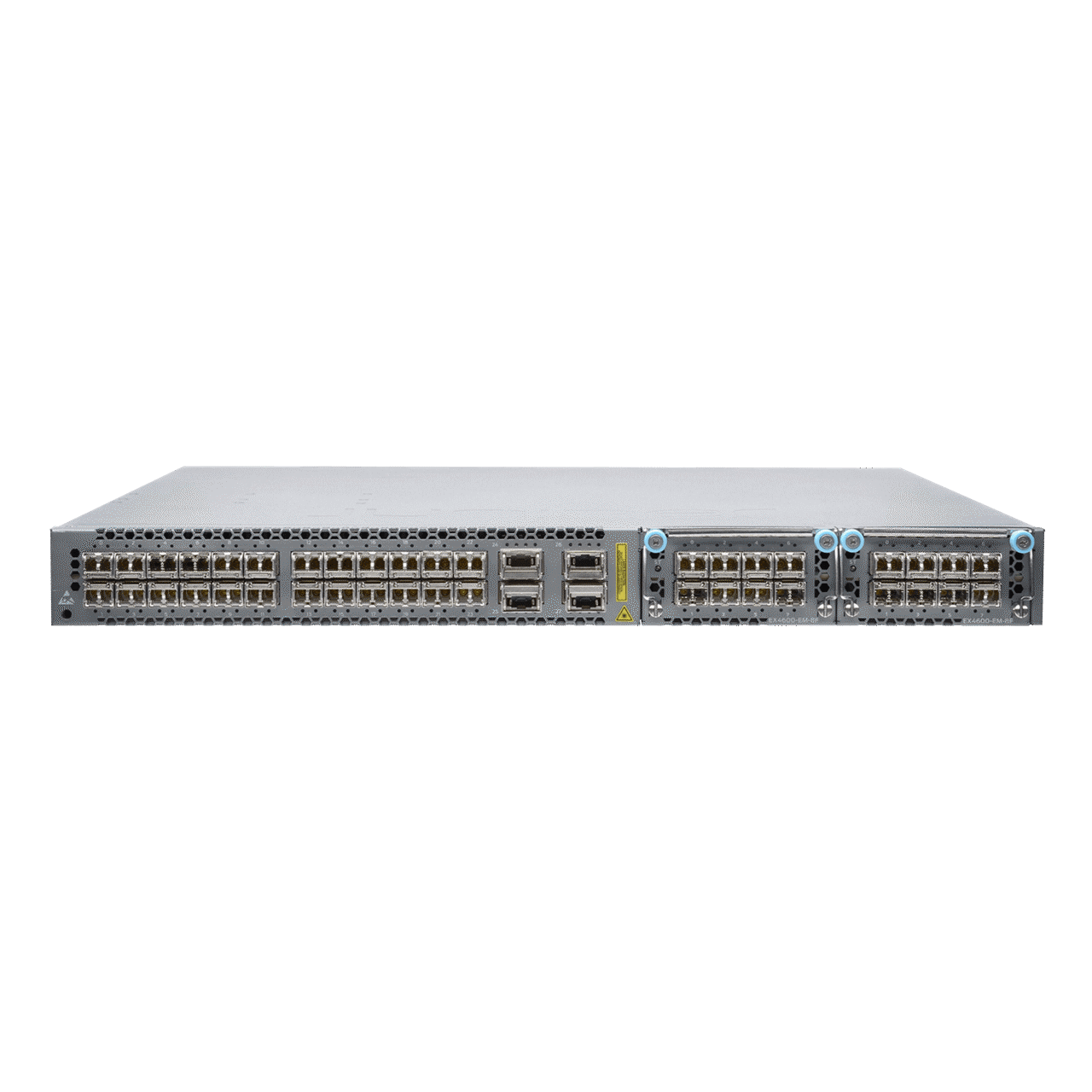
The EX4600 Ethernet Switch offers a compact, highly scalable, high-performance 10GbE solution for enterprise campus distribution deployments as well as low-density data center top-of-rack environments.
| Port density | 24 x 1/10GbE and 4 QSFP+ 40GbE plus expansion slots |
| Form factor | 1 RU |
| MACsec | 400 Gbps of near-line encryption |
| Switching capacity | 720 Gbps |
| Fabric | Virtual Chassis, MC-LAG |

Access
PoE (802.3af)
PoE+ (802.3at)
Fast PoE
1GbE
Mist AI
The EX4100 Ethernet Switch is an AI-driven, cloud-ready access switching platform with flow-based telemetry and advanced security built-in, crafted for high-performance campus deployments.
| Port density | 1GbE access ports, 10/25 GbE uplink/stacking, 1/10GbE uplink |
| Form factor | 1 RU |
| Power | PoE+ up to 30W per port, 1440W PoE for EX4100-48P, and EX4100-24P |
| Switching capacity | 376 Gbps |
| Fabric | EVPN-VXLAN, Virtual Chassis |

Access
PoE (802.3af)
PoE+ (802.3at)
Fast PoE
1GbE
Mist AI
The EX4100-F Ethernet Switch is an AI-driven, cloud-ready access switching platform with flow-based telemetry and advanced security built-in, crafted for high-performance campus deployments.
| Port density | 1GbE access ports, 1/10 GbE uplink/stacking, 100M/1/2.5/5/10 GbE uplink |
| Form factor | 1 RU |
| Power | PoE+ up to 30W per port, 180W* PoE for EX4100-F-12P, 370W PoE for EX4100-F-24P, and 740W PoE for EX4100-F-48P
|
| Switching capacity | 256 Gbps |
| Fabric | EVPN-VXLAN, Virtual Chassis |
Access
PoE (802.3af)
PoE+ (802.3at)
PoE++ (802.3bt)
Fast PoE
Multigigabit
1GbE
Mist AI
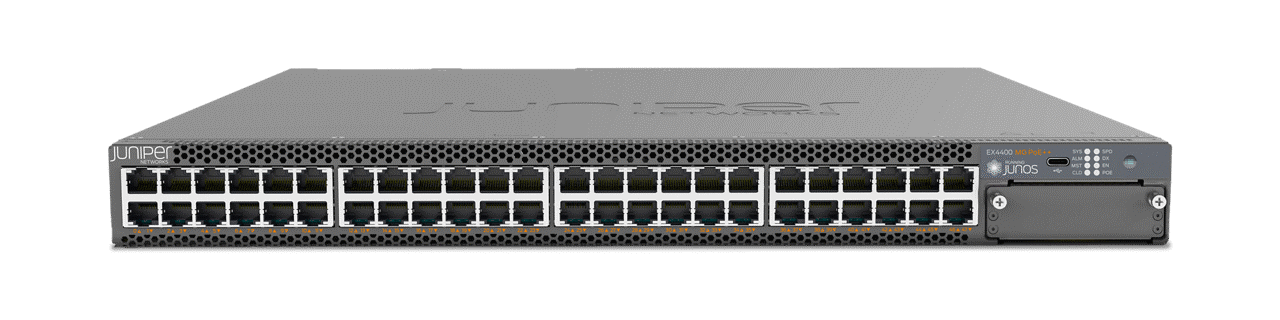
The EX4400 Multigigabit Ethernet Switch is an AI-powered, cloud-ready access switching platform with flow-based telemetry and advanced security for high-performance campus deployments.
| Port density | 100M/1/2.5/5/10GbE, 100GbE uplink/stacking, Optional 10/25GbE uplink port options |
| Form factor | 1 RU |
| Power | PoE++ up to 90W per port; 2200W PoE power budget for EX4400-48MP, 1800W for EX4400-24MP |
| Switching capacity | 1080 Gbps |
| Fabric | EVPN-VXLAN, Virtual Chassis |
Access
PoE (802.3af)
PoE+ (802.3at)
PoE++ (802.3bt)
Fast PoE
1GbE
Mist AI
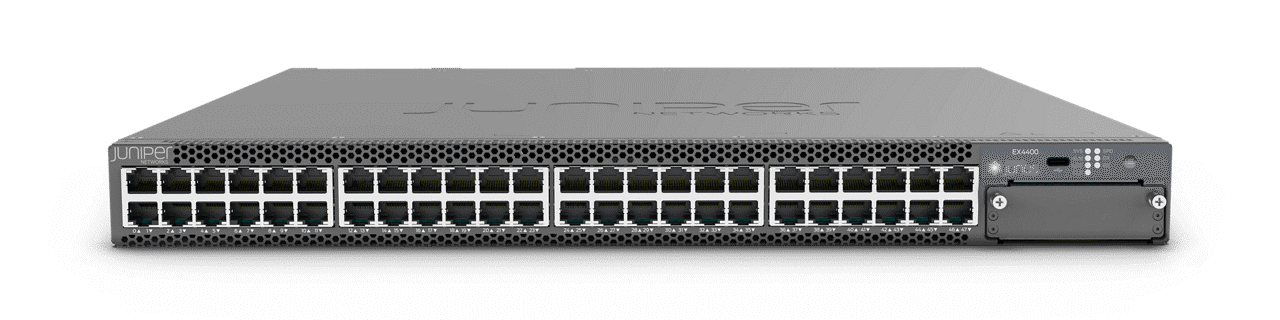
The EX4400 Ethernet Switch is a cloud-ready, AI-powered access switching platform with advanced security for high-performance campus deployments.
| Port density | 1/10GbE access ports, 100GbE uplink/stacking, Optional 10/25GbE uplink |
| Form factor | 1 RU |
| Power | PoE++ up to 90W per port; 1800W power budget for EX4400-48P, 1440W for EX4400-24P |
| Switching capacity | 912 Gbps |
| Fabric | EVPN-VXLAN, Virtual Chassis |
Access
PoE (802.3af)
PoE+ (802.3at)
PoE++ (802.3bt)
Multigigabit
1GbE
Mist AI
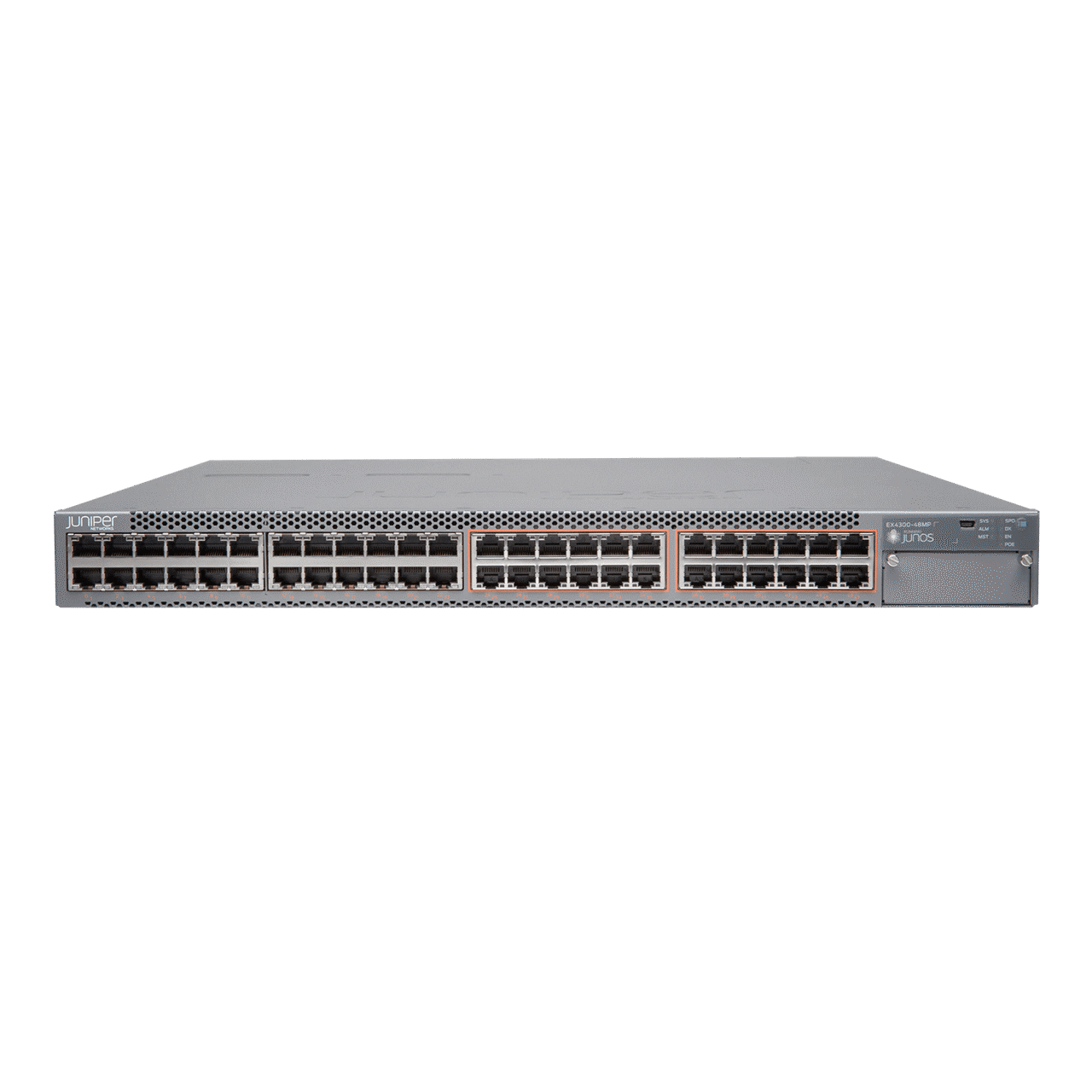
The EX4300 Multigigabit Ethernet Switch is a high-performance access switch for advanced branch or campus deployments.
| Port density | 100M/1/2.5/5/10GbE and 10/25/40/100GbE uplink port options |
| Form factor | 1 RU |
| Power | PoE/PoE+/PoE++ up to 95W per port |
| Switching capacity | 960 Gbps |
| Fabric | EVPN-VXLAN, Virtual Chassis |
PoE (802.3af)
PoE+ (802.3at)
PoE++ (802.3bt)
1GbE
Access
Mist AI
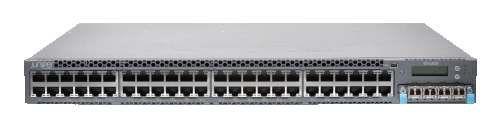
The EX4300 line of Ethernet switches are compact, fixed-configuration platforms that satisfy a variety of high-performance campus and data center access needs.
| Port density | 1GbE and SFP+/QSFP+ uplink port options |
| Form factor | 1 RU |
| Power | PoE/PoE+ up to 30W per port |
| Switching capacity | 496 Gbps |
| Fabric | Virtual Chassis |
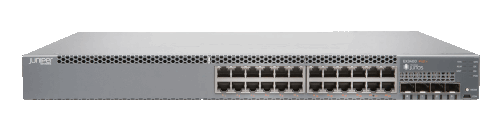
PoE (802.3af)
PoE+ (802.3at)
1GbE
Access
Mist AI
The EX3400 line of Ethernet switches are a cost-effective solution for today’s most demanding converged data, voice, and video enterprise access networks.
| Port density | 1GbE and SFP+/QSFP+ uplink port options |
| Form factor | 1 RU |
| Power | PoE/PoE+ up to 30W per port |
| Switching capacity | 336 Gbps |
| Fabric | Virtual Chassis |
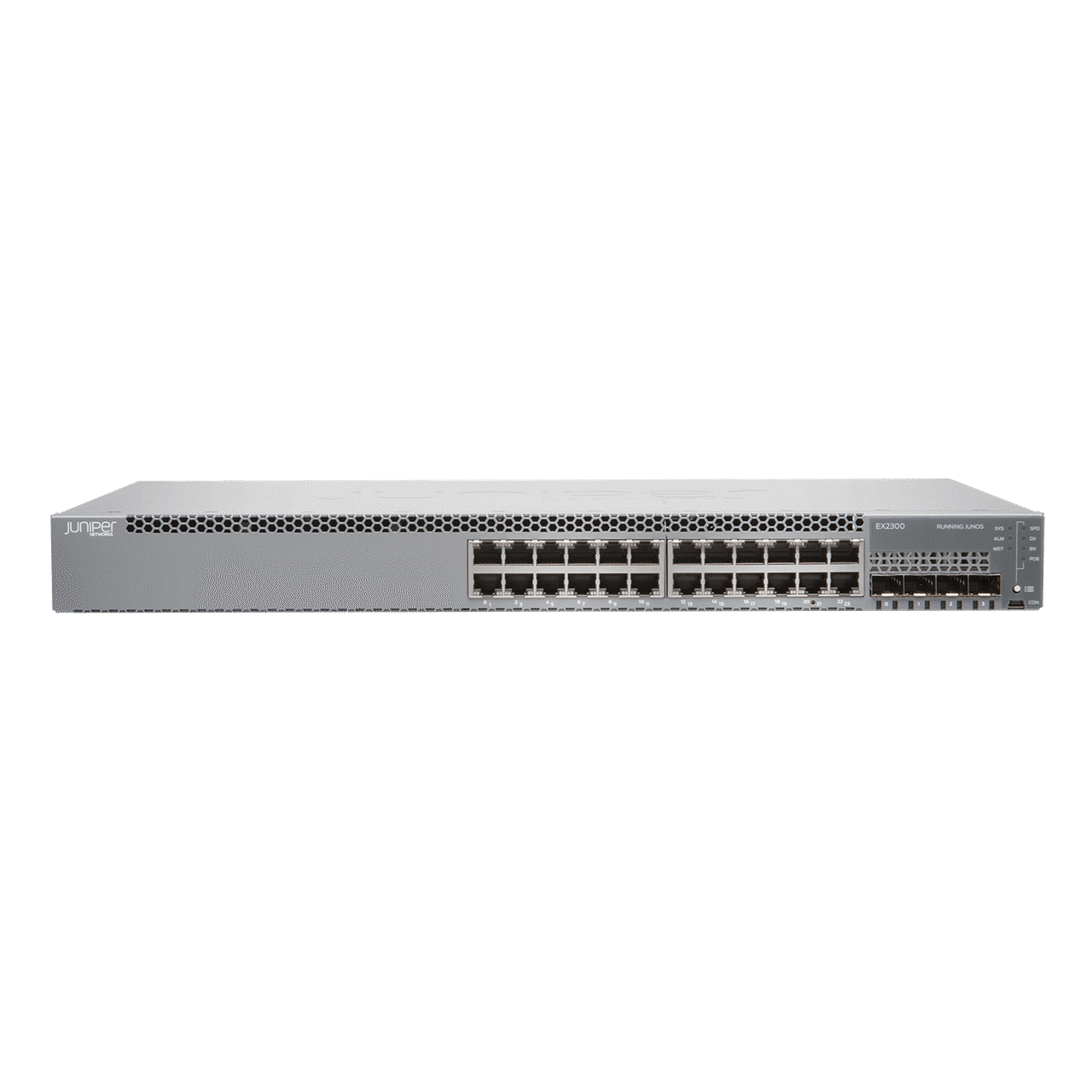
PoE (802.3af)
PoE+ (802.3at)
1GbE
Access
Mist AI
The EX2300 Ethernet Switch delivers a compact, high-density, cost-effective solution for small network environments where space and power are at a premium.
| Port density | 1GbE and SFP+ uplink port options |
| Form factor | 1 RU |
| Power | PoE/PoE+ up to 30W per port |
| Switching capacity | 176 Gbps |
| Fabric | Virtual Chassis |
CUSTOMER SUCCESS
Dartmouth Transforms Campus Experience with AI Insights
Universities are under pressure to meet student expectations for fast, pervasive, and reliable access to the applications they need, no matter where they are on campus. To deliver an amazing service experience, Dartmouth turned to a network powered by Mist AI and automation.


Why Juniper is outpacing the competition
Before you take another step in building out your network, check out this wired and wireless LAN comparison guide. See how Juniper, driven by Mist AI™, stacks up against Cisco, Cisco Meraki, and Aruba/Hewlett Packard Enterprise.
See Juniper Mist AI in action
Join our weekly demo to see how we deliver the industry’s best access layer experience for wired and wireless networks.
Find EX Series in these solutions

SOLUTION
Our wired portfolio—coupled with wireless—combines performance and simplicity at scale while delivering optimized experiences to users and devices via AI-Native insights and automation.
SERVICES
Juniper Support Insights delivers holistic operational health visibility across all Junos OS devices. Now included with Juniper Care, Support Insights easily and securely connects devices to the cloud and provides actionable intelligence to help organizations optimize their networks.

SERVICES
Our services help you automate your entire Juniper environment, client to cloud, across wireless and wired LANs, data centers, and the WAN with a range of planning, deployment, management, and support offerings.

SERVICES
Simplify and accelerate modern data center deployments and migrations through the use of validated reference designs, time-tested methodologies, and automated processes and software.
Related Products
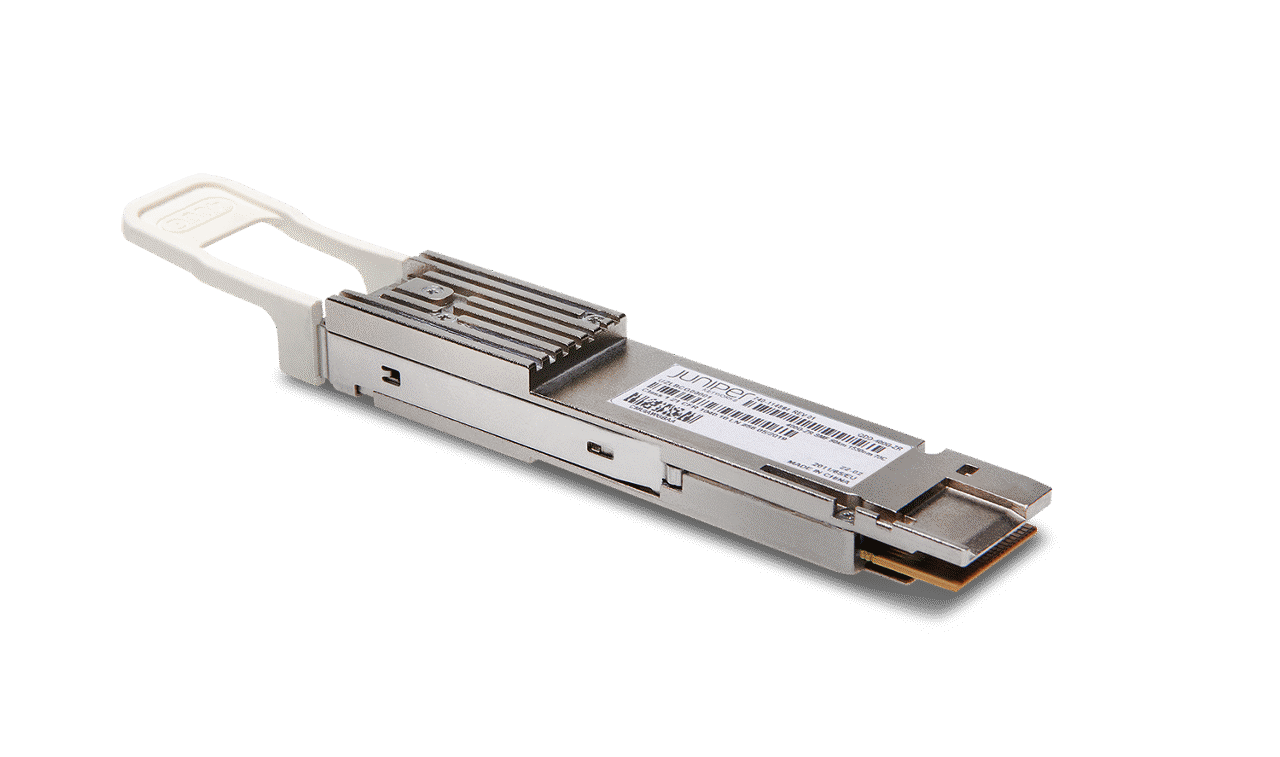
PRODUCT FAMILY
Juniper offers a complete portfolio of standards-compliant optics including direct-detect and coherent optical transceivers, application-specific pluggables, and optical and electrical cables. Our broad portfolio of standards-compliant optics delivers leading performance and operational simplicity for deployments across WAN, data center, and enterprise networks.
Winning starts with the network
See why the Aston Martin Aramco Cognizant Formula One™ team chose Juniper for their new, state-of-the-art factory.
