Help us improve your experience.

Let us know what you think.

Do you have time for a two-minute survey?


View Equal Cost Multiple-Paths

Equal Cost Multiple-Paths (ECMP) reports provide a list of all the ECMPs available in your network. You can also view each individual paths highlighted in a separate window.

To view ECMPs in your network:

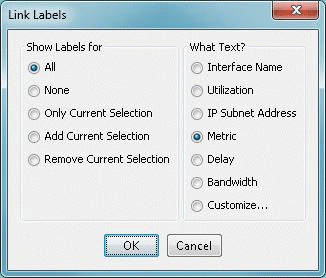
  1. Right-click on the topology map and select Labels > Link Labels > Show Link Metrics.
    Figure 1: Show Link DistanceDialog box titled Link Labels for network tool with options to show labels for all, none, or current selection, and to display interface name, utilization, IP subnet address, metric, delay, or bandwidth. OK and Cancel buttons at the bottom.
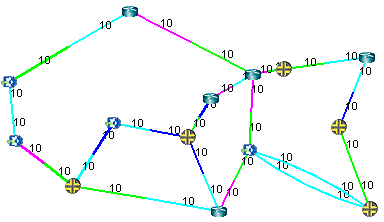
  2. The link metrics are displayed.
    Figure 2: Topology Map with Link DistancesNetwork topology diagram with interconnected nodes and links labeled 10 indicating possible bandwidth or costs.
  3. Select Report > Report Manager to open up the Report Manager.
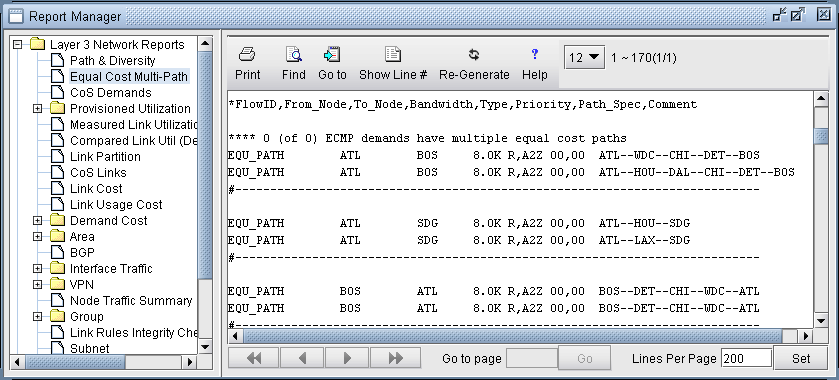
  4. Select Network Reports > Demand Reports > Equal Cost Multi-Path Report from the left panel to bring up the report listing all of the equal cost multiple-paths of the network. As can be seen in Figure 3, there are many such paths. This report is also saved on the server as EQPATHRPT. runcode. Note that the ECMP paths are calculated based on IP metric only, and do not factor in the influence of MPLS traffic engineering tunnels on the demand routing.
    Figure 3: Equal Cost Multiple-Paths ReportNetwork analysis tool interface showing Layer 3 ECMP routing details with hierarchical menu and toolbar for report management.
  5. Select Network > Path & Capacity > Equivalent Path to bring up the Demand Equivalent Path window.
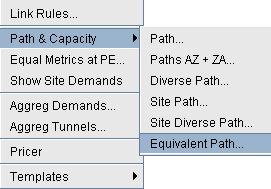
    Figure 4: Network > Path & Capacity > Equivalent PathDropdown menu from software interface with options for network path and capacity management including Link Rules, Path and Capacity, Equal Metrics at PE, Show Site Demands, Aggreg Demands, Aggreg Tunnels, Pricer, Templates.
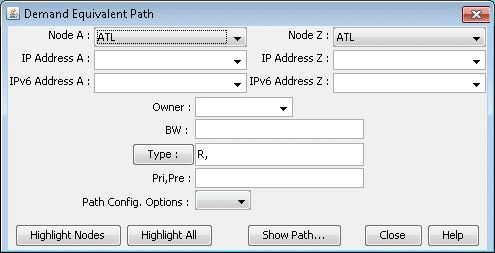
  6. Select Node A and Node B, then click Show Path. The Path window will be displayed.
    Figure 5: Demand Equivalent PathGUI for network path configuration with node selection, IP address fields, bandwidth, path type, priority settings, and highlight options.
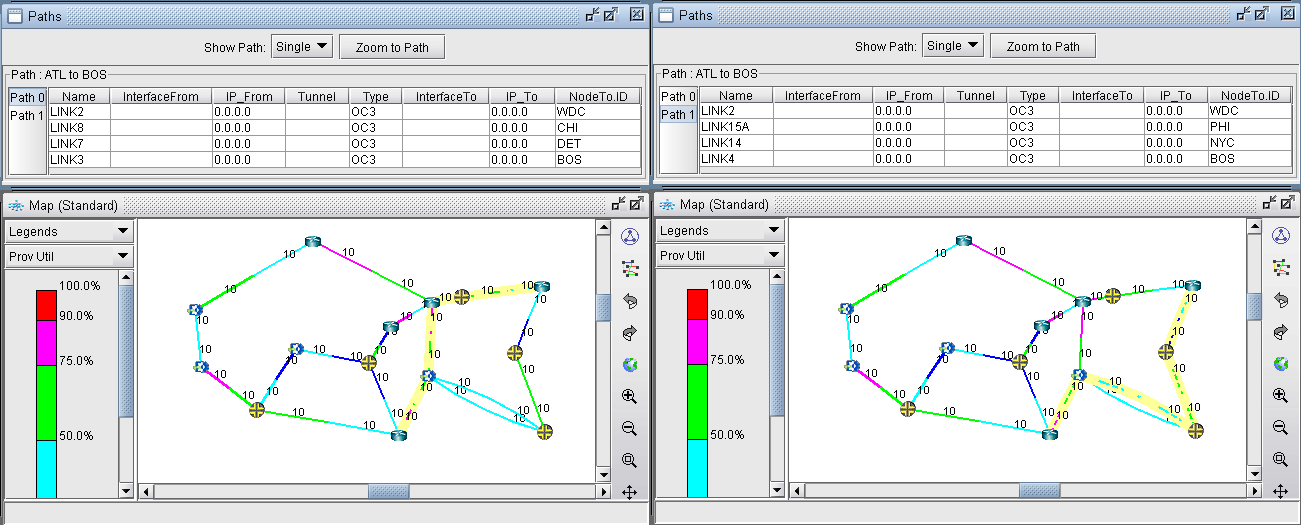
  7. All of the equivalent paths between the two selected nodes will be displayed in the Paths window. Select a path to view its detailed information and highlight it on the topology map.
    Figure 6: Equivalent Cost PathsNetwork visualization tool showing paths from ATL to BOS with links like LINK2 and LINK8. Bottom panels display network topology with nodes ATL, BOS, WDC, etc. Links are color-coded for utilization: red for 100 percent, yellow for 90 percent, green for 75 percent, and cyan for 50 percent or lower. Legend explains utilization colors.

    Reducing Equal Cost Multiple Paths

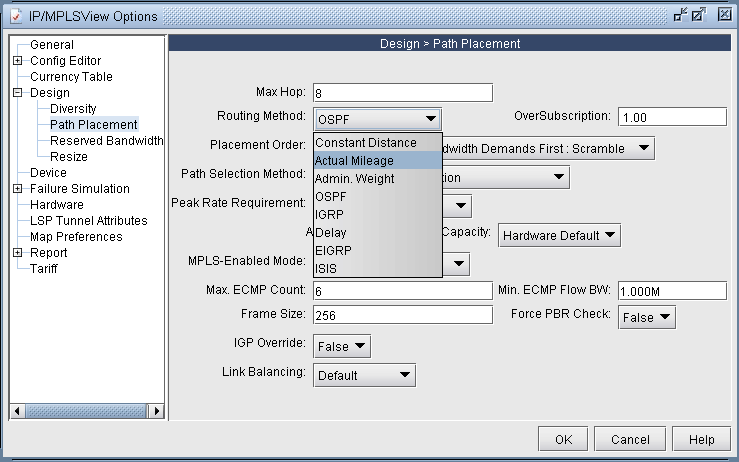
  8. If you choose your link metrics wisely (such as using the real distance in miles like in Figure 7), you can increase the variability of the path costs which will make it less likely for equal cost multiple-paths to occur.
    Figure 8: Routing according to Actual MileageConfiguration window for IP/MPLS networks, titled Design > Path Placement, with options for max hop, routing method, placement order, path selection, peak rate, MPLS mode, max ECMP count, frame size, PBR check, IGP override, and link balancing. Navigation menu on the left includes General, Design, Device, Failure Simulation, and Report sections.
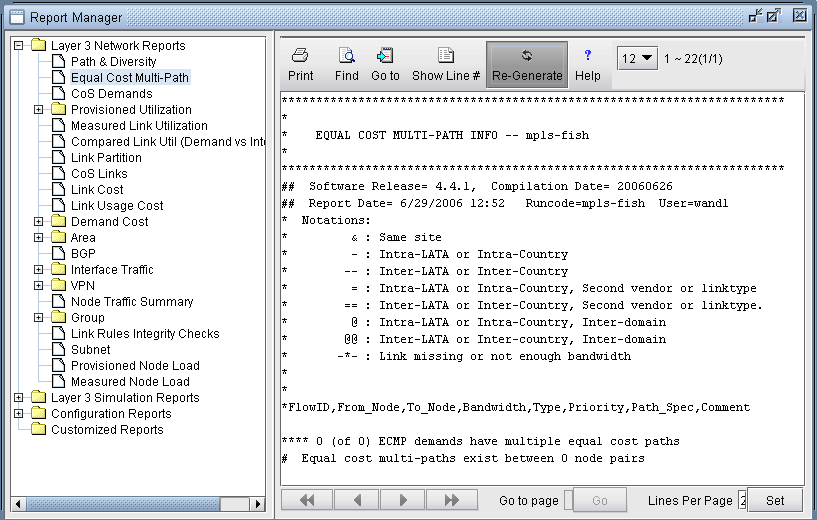
  9. Open the Equal Cost Multi-Path Report again and you will see that there are no longer any equal cost multiple-paths in the network with the new link metrics.
    Figure 9: New Equal Cost Multiple-Paths ReportReport Manager interface displaying EQUAL COST MULTI-PATH INFO mpls-fish with software version, compilation, and report dates. Includes network path symbols and categories like Layer 3 Network Reports and Provisioned Utilization. Options for printing, finding, and navigating are available.