Help us improve your experience.

Let us know what you think.

Do you have time for a two-minute survey?


VPN Configlet Generation

As mentioned earlier under the sections under VPN Design and Modeling using the VPN Wizard, the VPN Module gives you the ability to generate VPN configlets for a particular VPN. For instance, the last step under the section, L3 (Layer 3) VPN, describes how to generate and display the configlet for a L3VPN. The following figures show configlets generated for two of the VPNs discussed earlier.
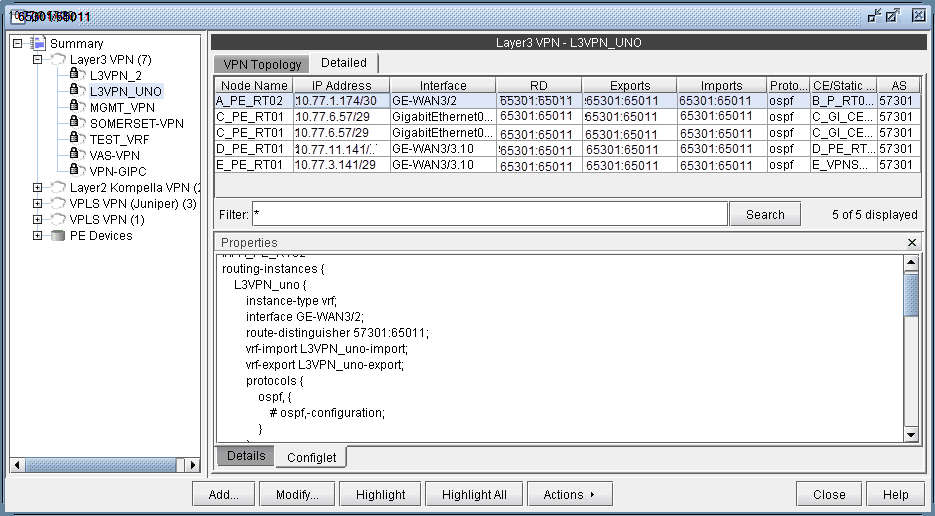
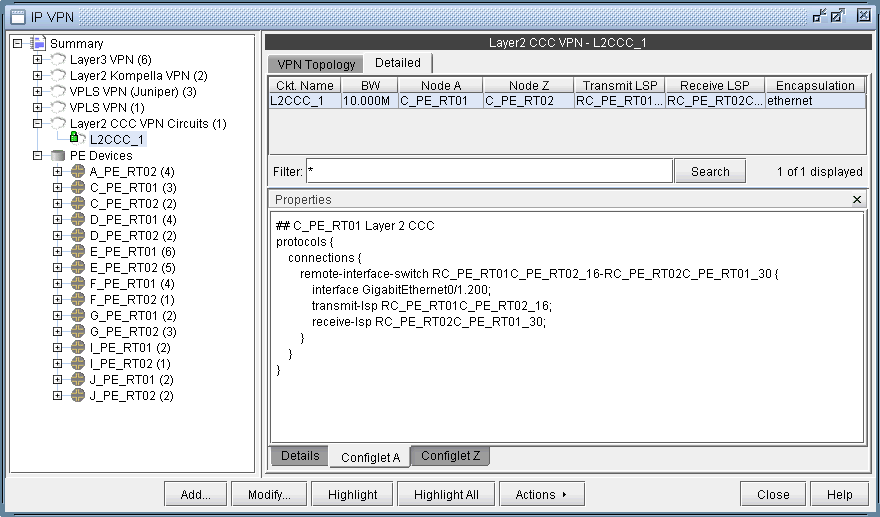
Figure 1: A Configlet Generated for a L3VPNNetwork management tool showing Layer 3 VPN details for L3VPN_UNO, including node names, IP addresses, interfaces, route distinguishers, and routing protocols.
Figure 2: A Configlet Generated for a L2CCC VPNNetwork management interface showing hierarchical view of VPN types and devices. Details for Layer2 CCC VPN circuit L2CCC_1 include circuit name, bandwidth, nodes, LSPs, and encapsulation type.

To generate configlets in batch for several of the VPNs in a network, you may use the VPN Configlet window (accessed via the Design > Configlets/Delta > VPN Configlet menu), shown in the following figure, where you can specify a particular directory (specified in the Directory box) to store the generated VPN configlets. In addition, you may also choose to generate configlets for particular nodes or VPNs via the Node/VPN drop-downs.
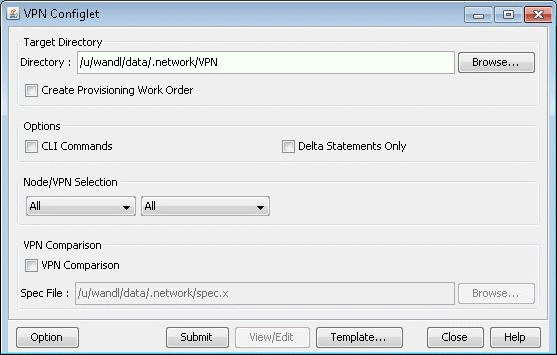
Figure 3: VPN Configlet MenuVPN Configlet interface for managing VPN settings with options for directory selection, work orders, CLI commands, node VPN selection, VPN comparison, and action buttons.

Select “CLI Commands” before clicking “Submit” to also generate the corresponding CLI commands corresponding to the configlet.

The following figure shows a VPN directory that contains all of the generated VPN configlets for the network.
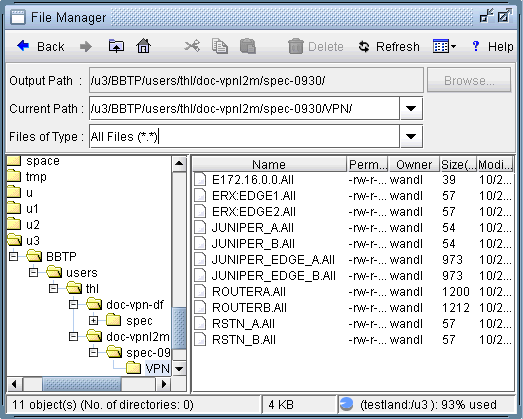
Figure 4: VPN Directory with the Generated VPN ConfigletsFile manager interface showing navigation toolbar, path fields with directory paths, directory tree with selected VPN directory, file list with columns for name, permissions, owner, size, modification date, and status bar indicating 11 files, 0 directories, total size 4 KB, and 93 percent disk usage.

An example of a generated VPN configlet is shown in the following figure.
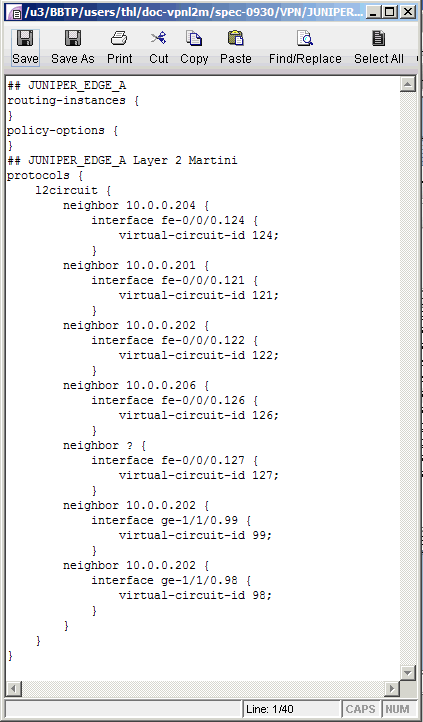
Figure 5: The Configlet Generated for JUNIPER_EDGE_AText editor window showing configuration file for Juniper device with Layer 2 Martini protocols for routing instance JUNIPER_EDGE_A.